
PEQUE
The project brief for this chair was to create the perfect seat in which to read a book that holds personal significance to the designer. Peque—short for pequeño, the Spanish word for “small”—draws inspiration from The Little Prince, the beloved book that serves as the foundation for this design. This seat is envisioned as a throne fit for a little prince, with an oversized scale that evokes the feeling of a small child sitting in a grand chair.
INTRO
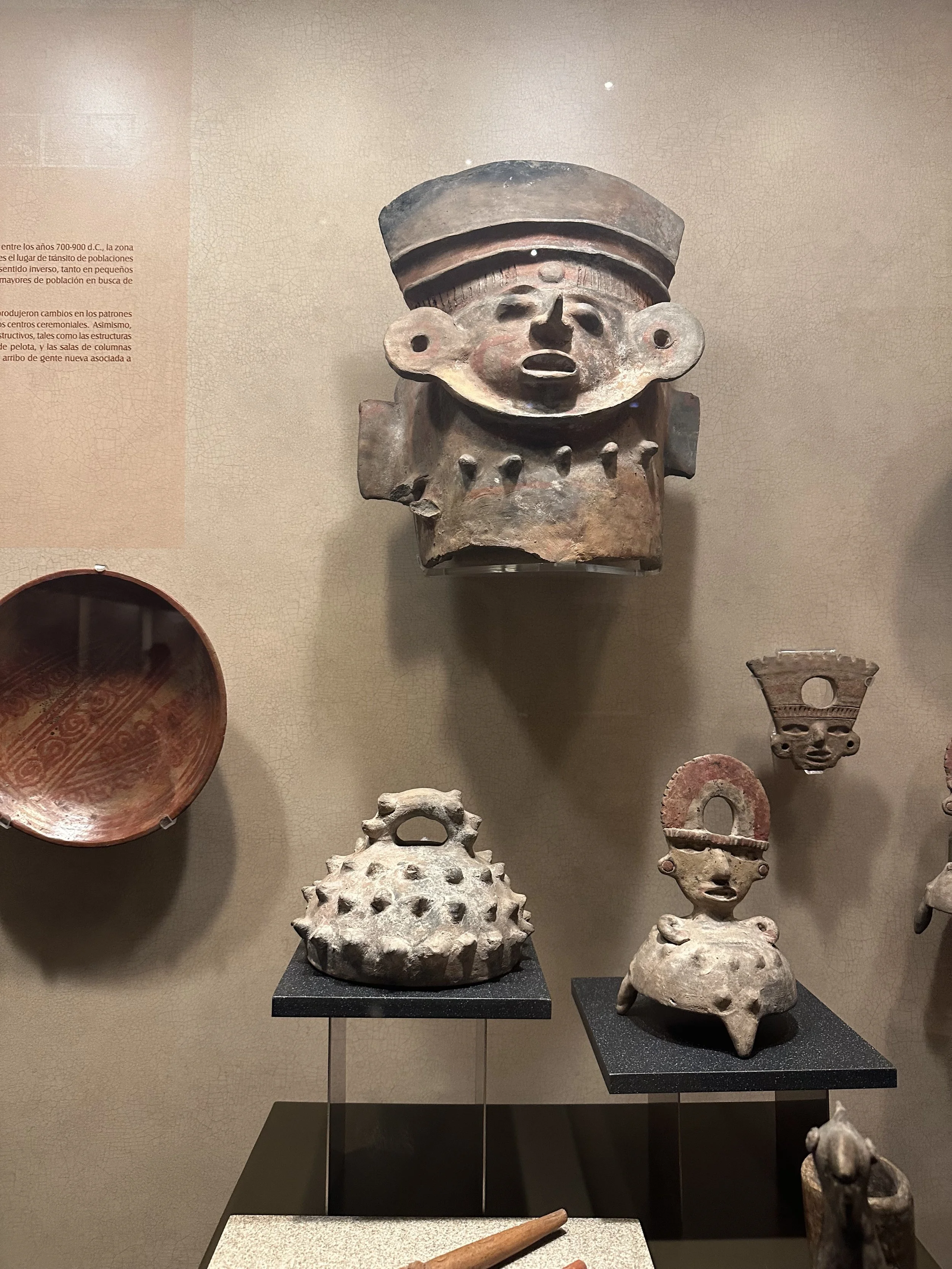
I have only recently begun working in ceramics, but a trip to Mexico City deeply shifted my relationship to the medium. While visiting the Museo Nacional de Antropología, I encountered a vitrine of centuries-old pottery produced in a border town between the Aztec Empire and the northern Indigenous tribes of Mexico. Although these groups were not part of the same organized government, culture, or religion they traded regularly, and that cultural intersection became visible through the town’s artisanal output. The pottery blended visual languages produced forms reminiscent of what we now associate with the American Southwest alongside elements rooted in the Mesoamerican lexicon. Encountering this work made it clear that the mixing of cultures and styles long predates modern ideas of “globalization.” Cultural exchange has shaped material culture for as long as people have interacted with one another.
exchange
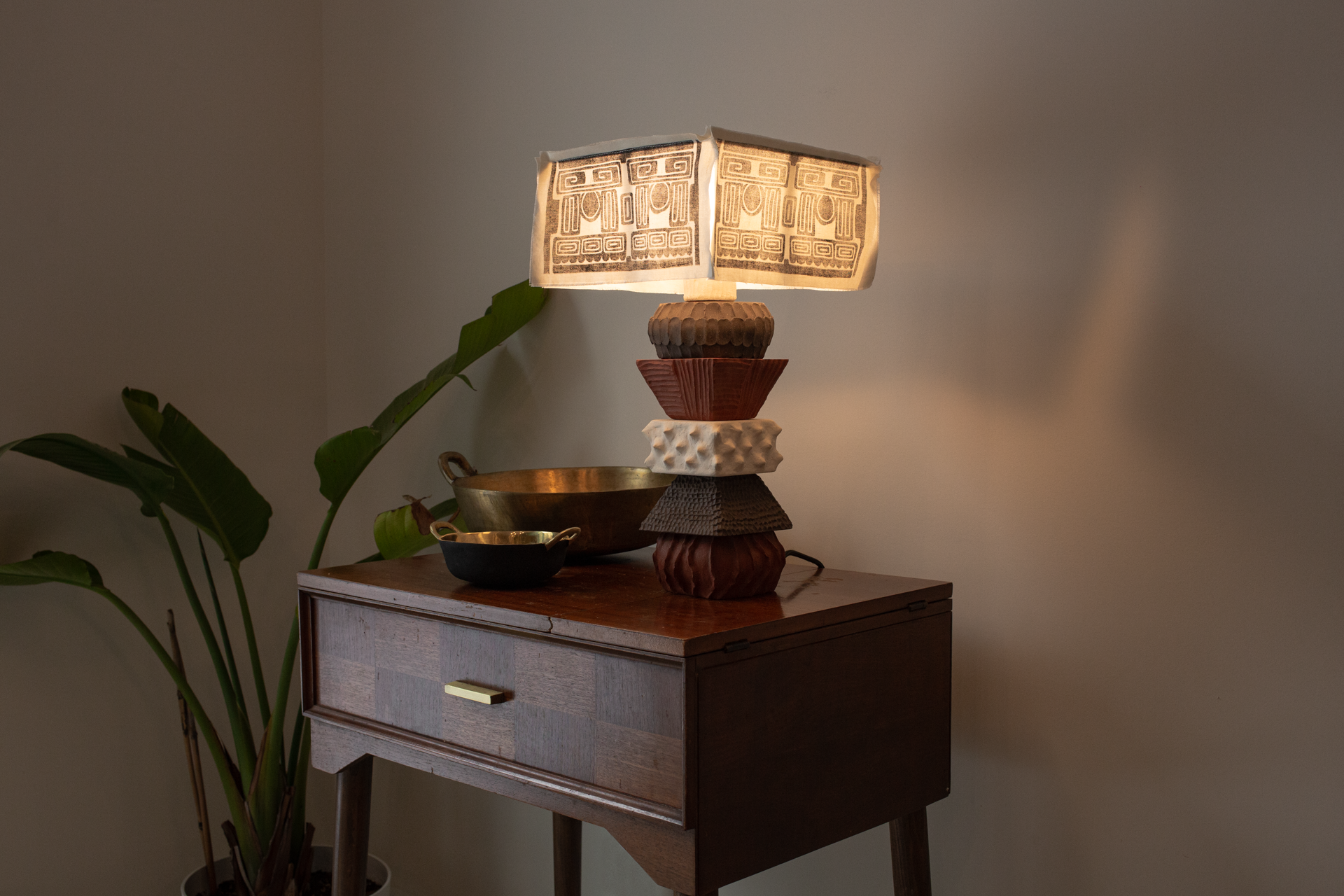
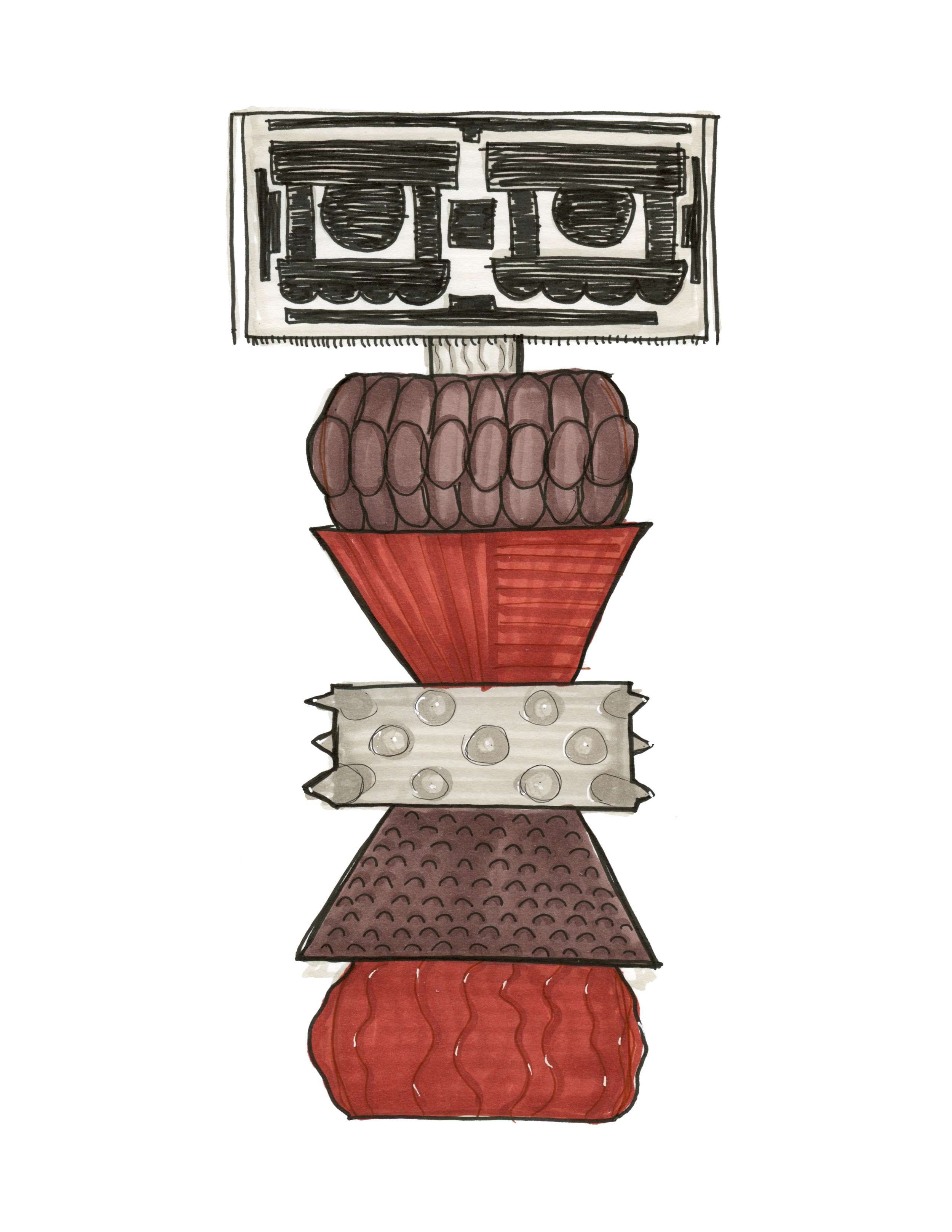
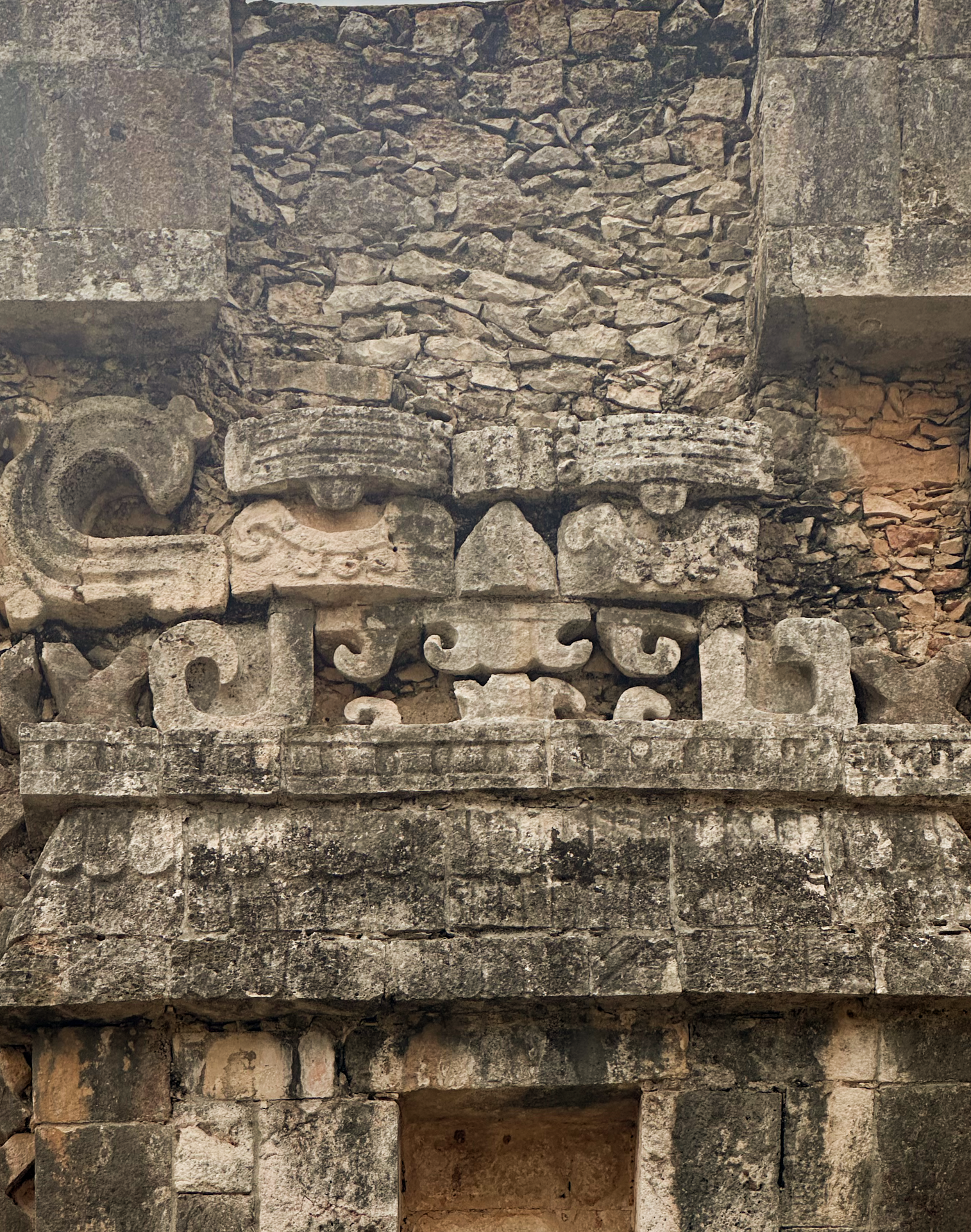
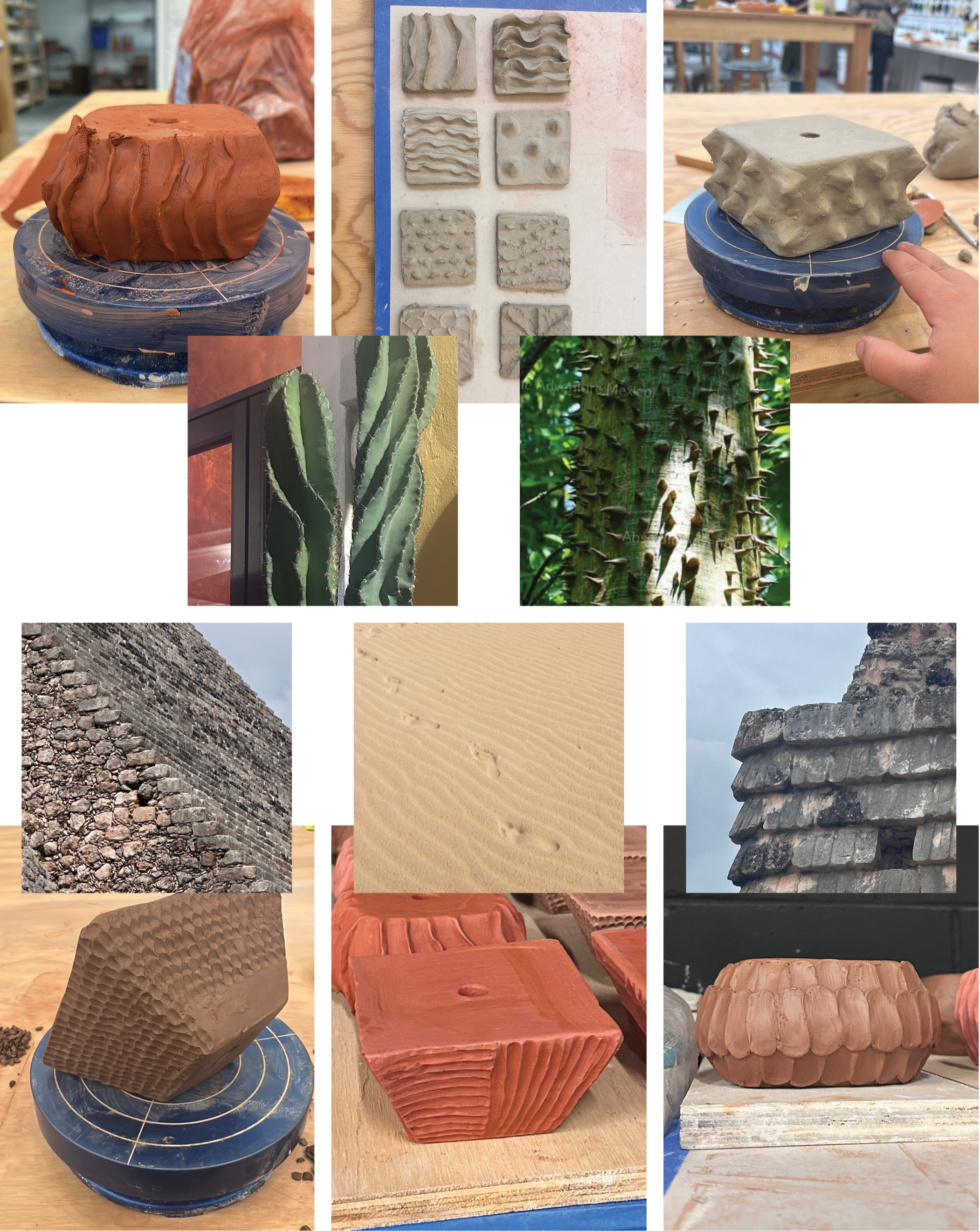
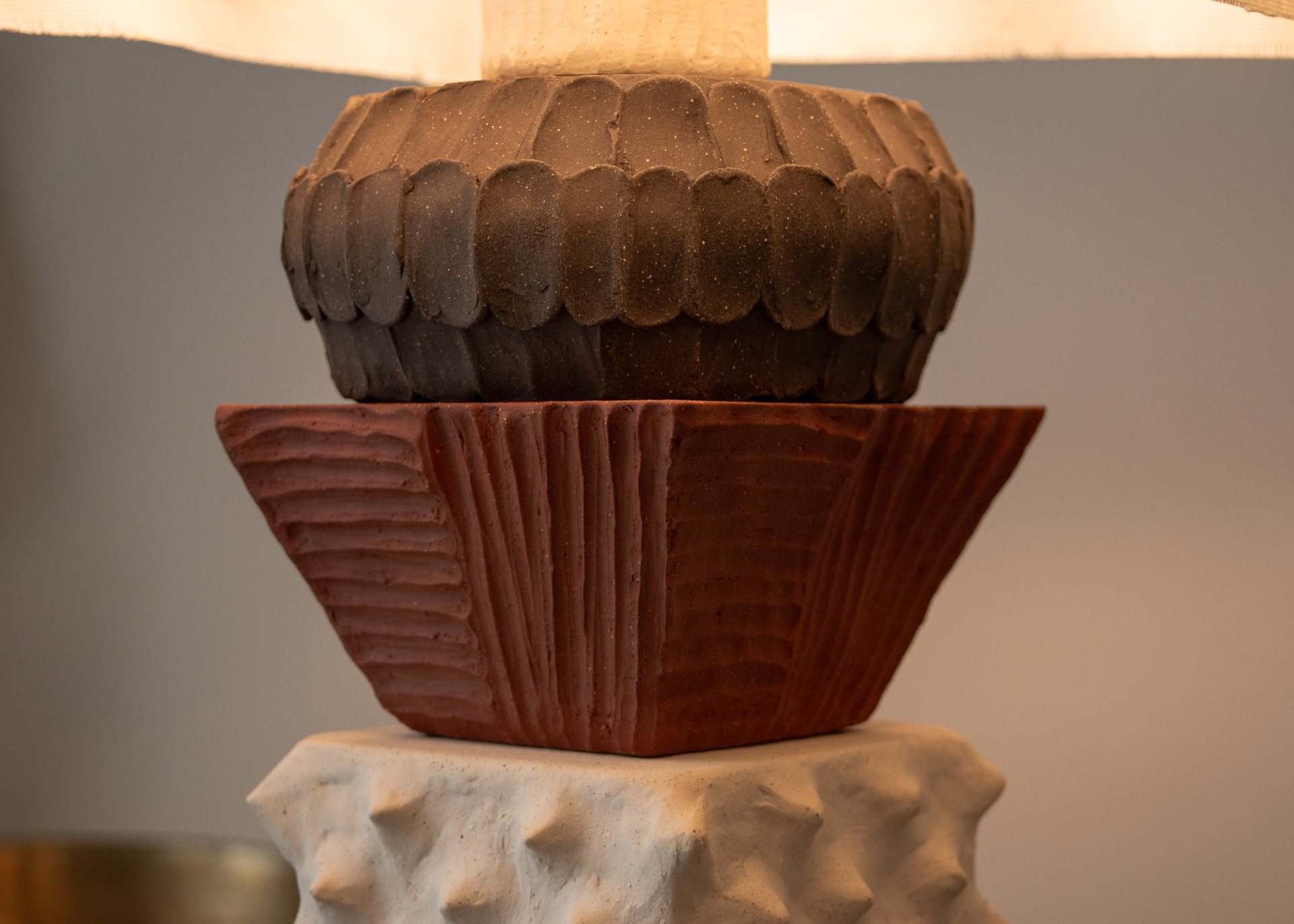
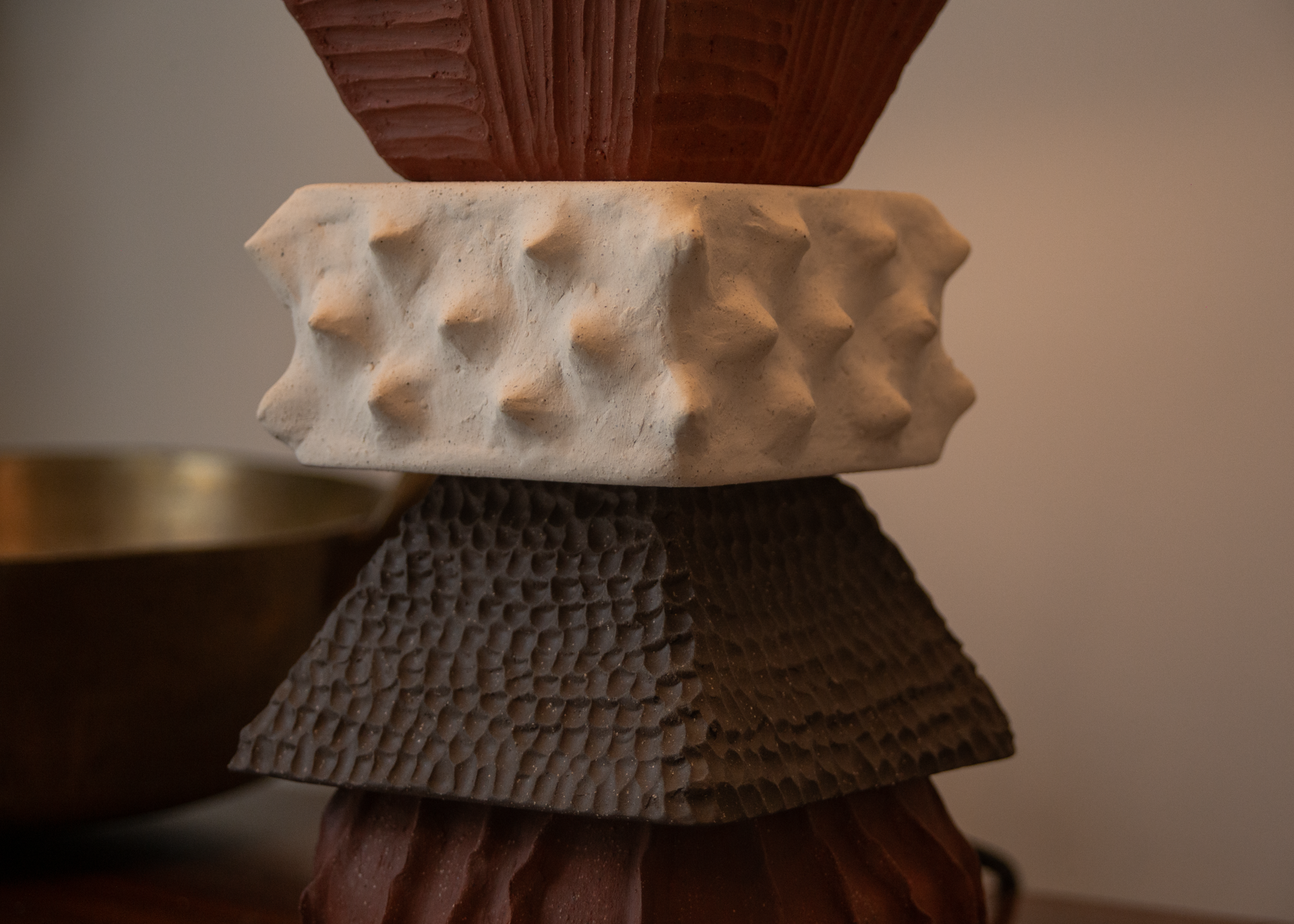
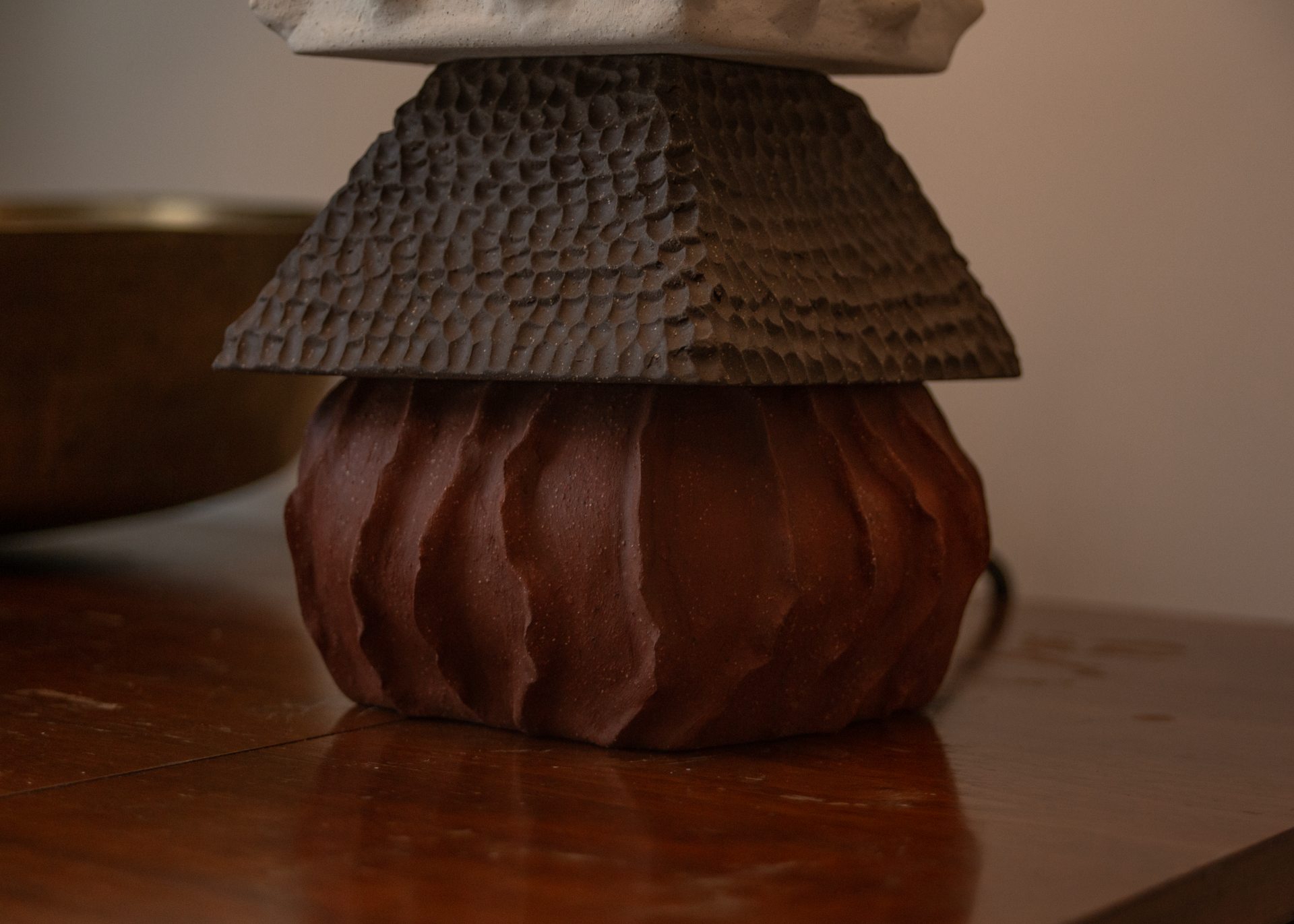
Apapuchi emerges from this understanding about exchange. It is a table lamp composed of stacked ceramic totem elements that integrate textures referencing natural forms, existing Mexican ceramic traditions, and architectural elements found in Mesoamerican ruins. The base is topped with a block-printed shade inspired by the masks of the gods that adorn the facades of Uxmal, abstracted eyes peering outward in the cardinal directions. Together, these elements form a vertical narrative of inheritance.

LAYERED IDENTITY
At its core, the piece explores how identity evolves across generations. Like the stacked ceramic forms, each generation is shaped by what came before it, yet inevitably takes on a new surface and contour. Lineage is never a perfect replication; it is an accumulation of unique elements shaped by experience and circumstance. Stacked like a totem, each surface represents the distinct experiences each generation contributes to what is carried forward.
The block-printed eyes are inspired by representations of dieties, but here I imagine the eyes as my own, looking toward the future, aware that I can walk in any direction.
This work allows me to reflect on my experience as a Mexican-American. Like many children of immigrants, I carry a layered identity: a longing for lineage, community, and belonging alongside the independence and individualism of American life. I think often of my niece and nephew, born to a Mexican-American father and an Ecuadorian mother, and how their identities will be even more layered than my own. We do not fully choose what we pass down but we do provide the point where they begin walking their own path in the same way those who came before us did. Apapuchi is a reminder that identity is layered, adaptive, and alive. It is a reminder that we are carried on the shoulders of those before us, and we become part of the story of those we carry after us.
MATERIAL CONSIDERATION
Ceramic is central to this project for its aesthetic presence, deep historical practice, and alignment with my sustainability philosophy. As one of the world’s oldest mediums, clay carries knowledge accumulated across cultures and centuries, knowledge that can still guide contemporary making. Sometimes, innovation in sustainability lies in returning to what we already understand and applying it to the present.
My use of ceramic reflects a sustainability ethos rooted in renewable materials and time-honored practices. Clay can be reclaimed, recycled, and reintroduced throughout the production process, resulting in minimal material waste when approached with care and intention.
I believe handmade, bespoke objects foster emotional attachment, encouraging care, longevity, and repair rather than disposal. Apapuchi is designed for disassembly, ensuring that even as components age, the majority of the piece can remain in use, resisting obsolescence and honoring both material and labor.
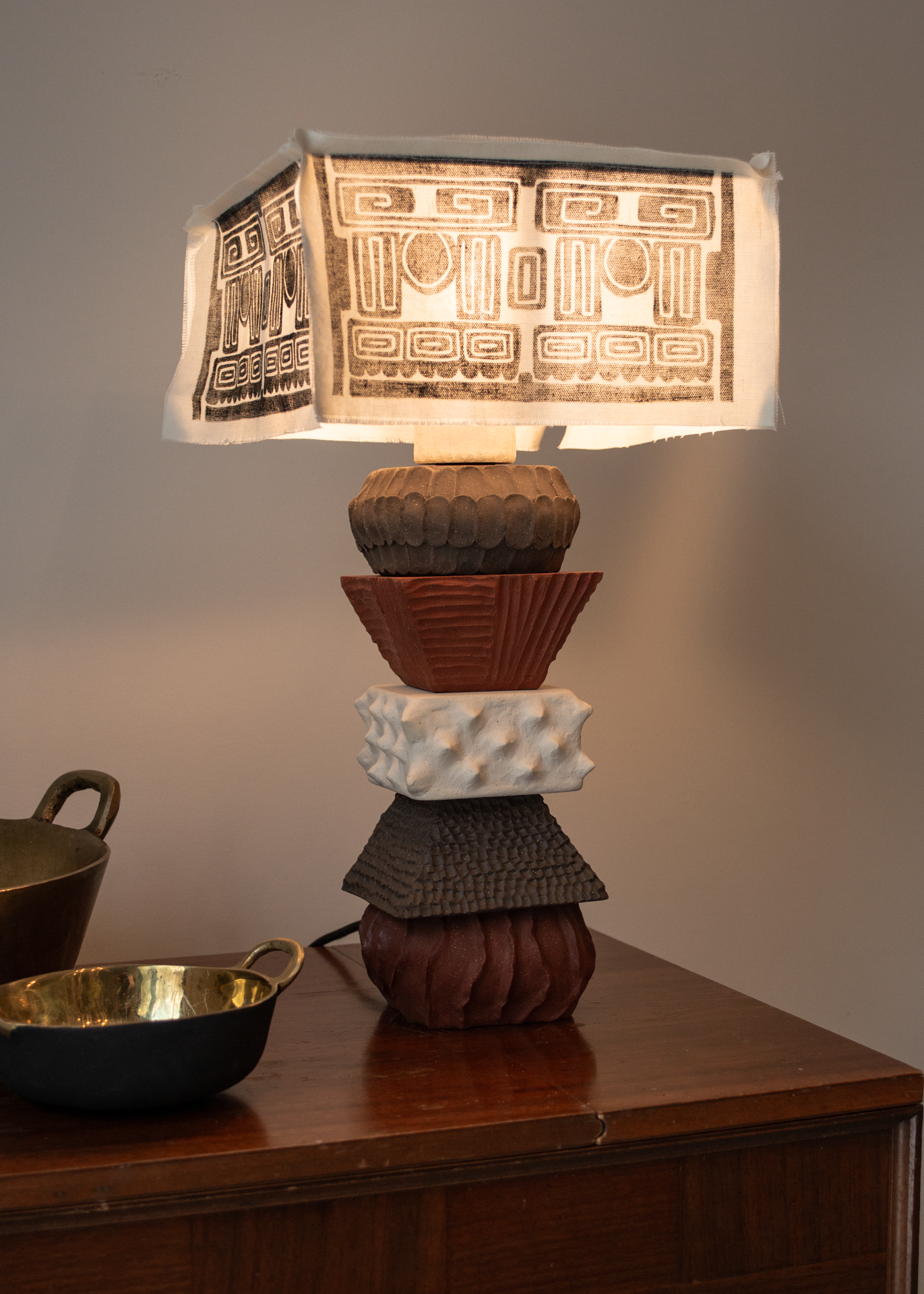
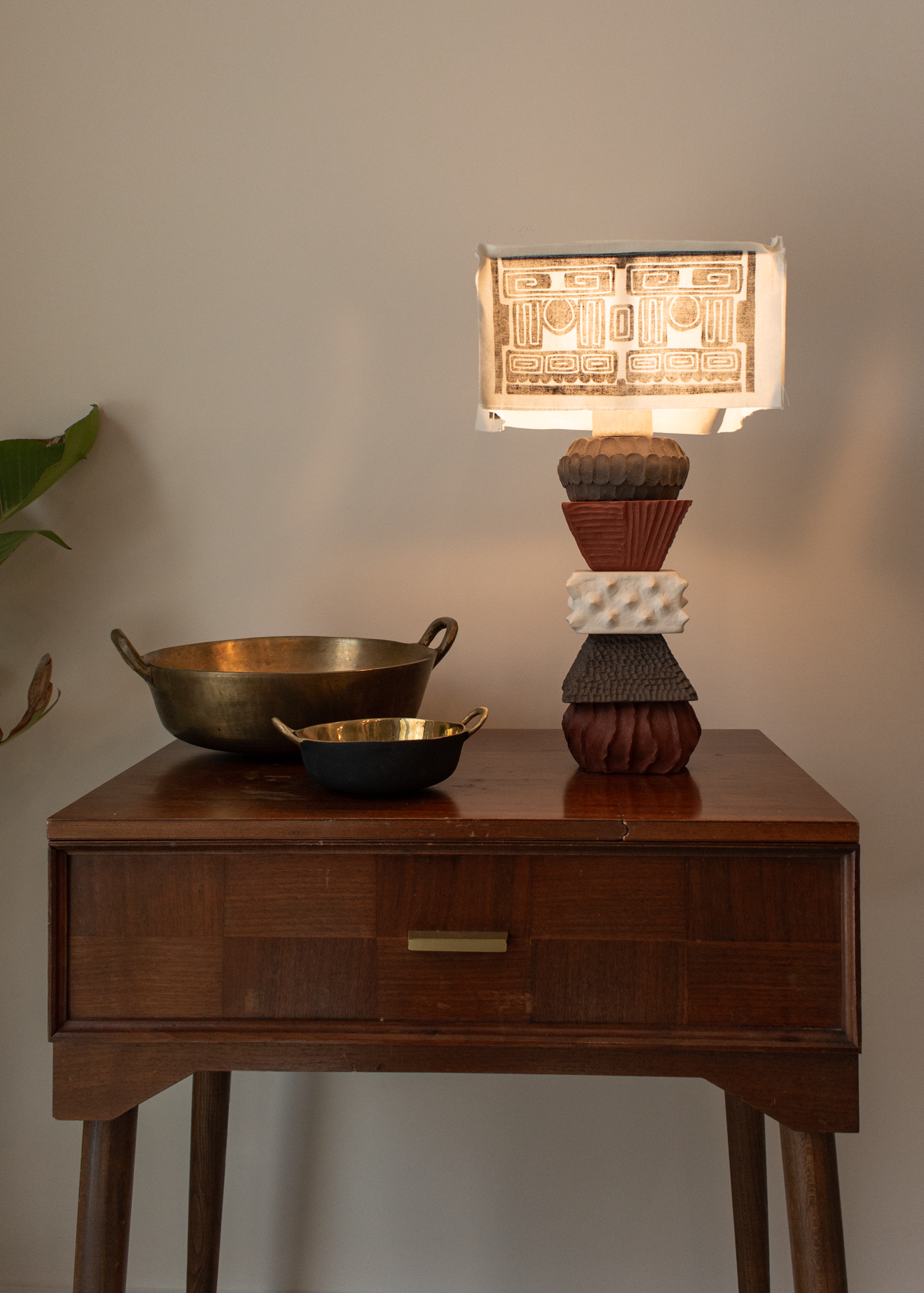
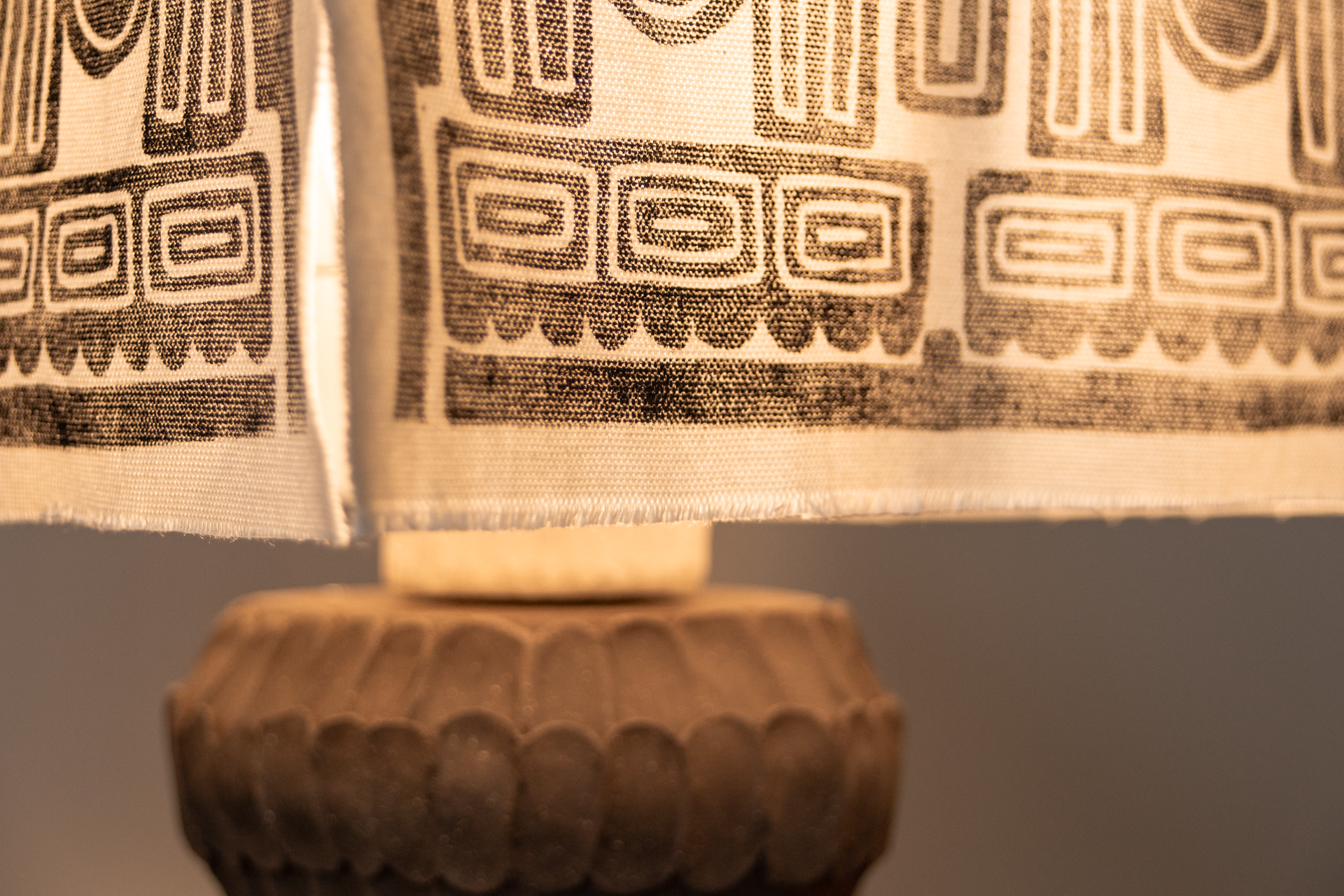
Apapuchi (2026)
Materials: Red, white, and brown clay. Block-printed cotton shade.
Dimensions: 17.5” H × 9” W x 9” D